Blog

Writing

Ideas, tutorials, and updates from our team.

  • product update

    JavaScript Error Tracking for Small Web Apps: What You Actually Need

    Error tracking for a small web app comes down to four things: catch what breaks, group the repeats, read the stack in your own code, and keep the minute before the crash. How each one works in the browser, what to throw away, and when you need a full monitoring tool.
  • bug tracking

    Bug Tracker Notifications: Who Should Hear About a Change?

    A notification nobody acts on teaches people to ignore the next one. How we decided who hears about a task change in BugDump: recipients worked out from the task itself, nothing about your own edits, and a burst of triage clicks sent as one.

  • OAuth

    MCP Server OAuth: Letting Claude and ChatGPT Connect Without a Token

    Claude's custom connectors and ChatGPT have nowhere to paste a token, so BugDump's MCP server now lets them sign in. How the flow works, and the four decisions behind it: one connection for every project, known clients only, checks on every request, and changes that stay attributed.

  • widget

    Localizing an Embedded Widget: Page Language or Browser Language?

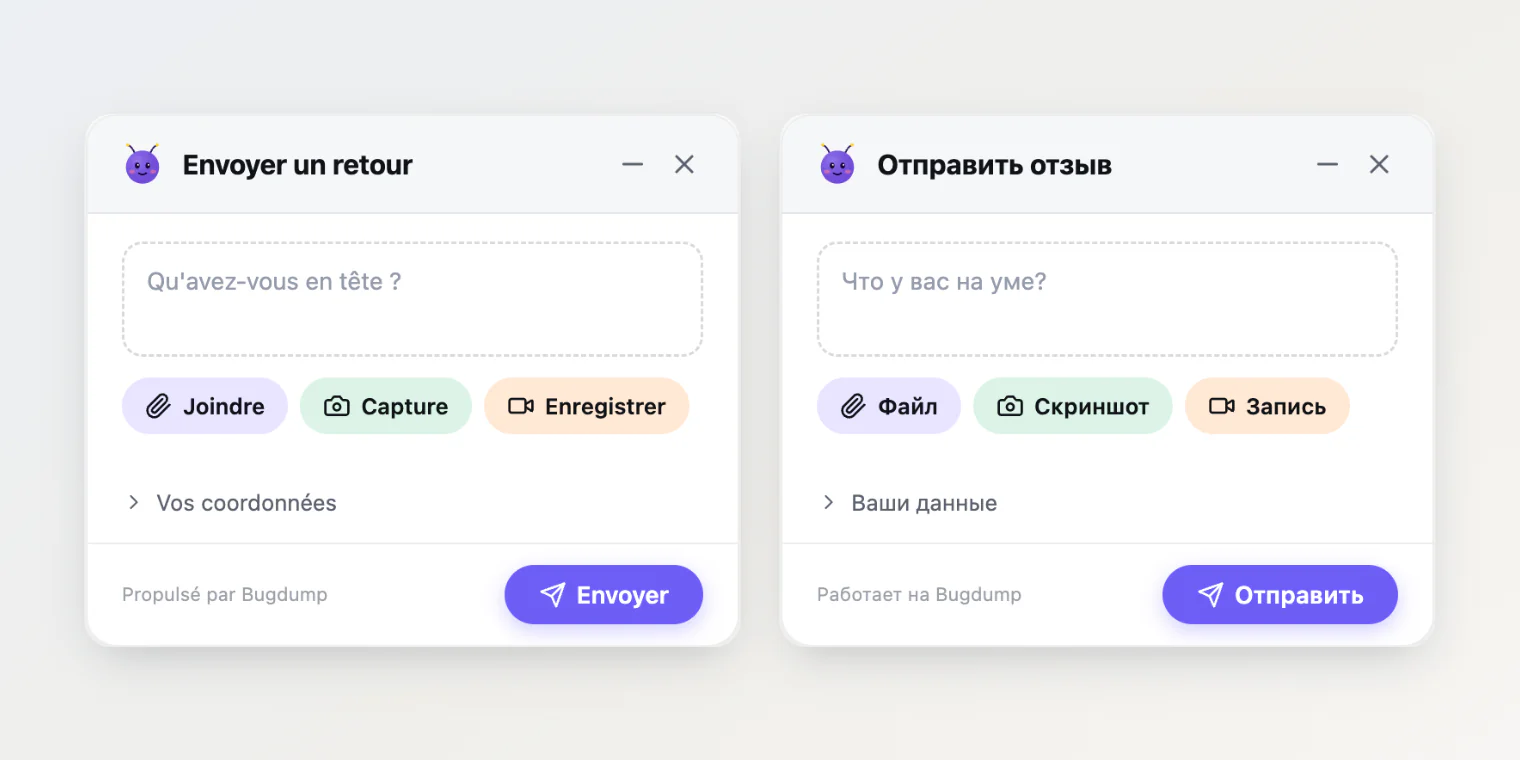
    An embedded widget can read the page's html lang, the visitor's navigator.languages, or what the site tells it. They often disagree. The order we chose for BugDump's widget, why the page goes first, and the small things that broke along the way.

  • MCP

    Why Your AI Agent Makes 40 Calls to Answer One Question

    Ask an agent for a weekly status report and watch it open every ticket one at a time. It is not being dumb — it is doing exactly what your API forced it to do. The N+1 problem, moved from your ORM to your MCP server, and the three questions that fix it.

  • bug tracking

    The Machine Name That Was Also the Display Name

    We gave every priority a stable key so integrations could rely on it. That key quietly became the value we sent to clients too — so making priorities editable meant finding nine readers, four switch statements that fail silently, and one assumption that was wrong in the plan.

  • bug tracking

    Bug Priority Levels: Why Four Fixed Choices Never Fit

    Every bug tracker ships low/medium/high/critical, and every team quietly renames them in their heads. What a priority scale is actually for, how many levels you need, and why the words have to be yours.

  • bug tracking

    Bug Tracking Metrics That Actually Matter

    Most bug dashboards count things. The useful ones answer a single question: are we keeping up? Four metrics that do, the ones that quietly mislead, and a five-minute weekly review built on them.

  • bug tracking

    Why Bug IDs Should Start at 1 in Every Project

    A bug ID is not a database row number. It is a word people say to each other. Here is why per-project numbering and a short project key like BD-42 make a bug tracker easier to talk about, and the trade-offs behind the design.